
Chionomys nivalis Martins, 1842 – European snow vole
- Arhizodont molars
- Cement present
- Microtine enamel
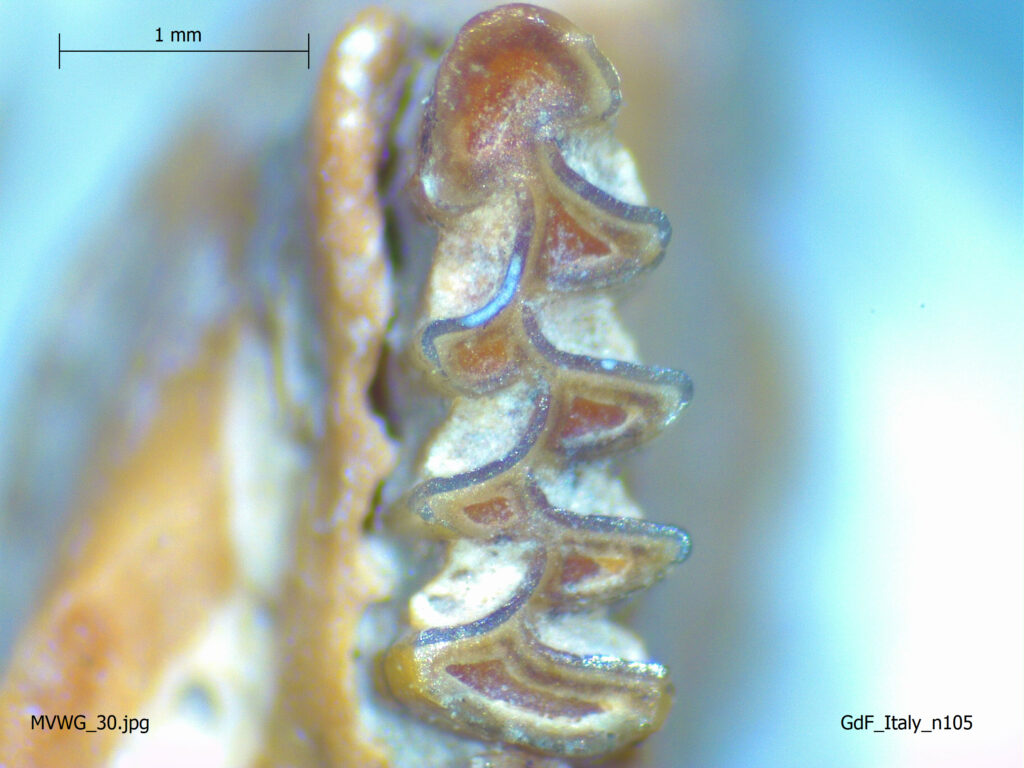
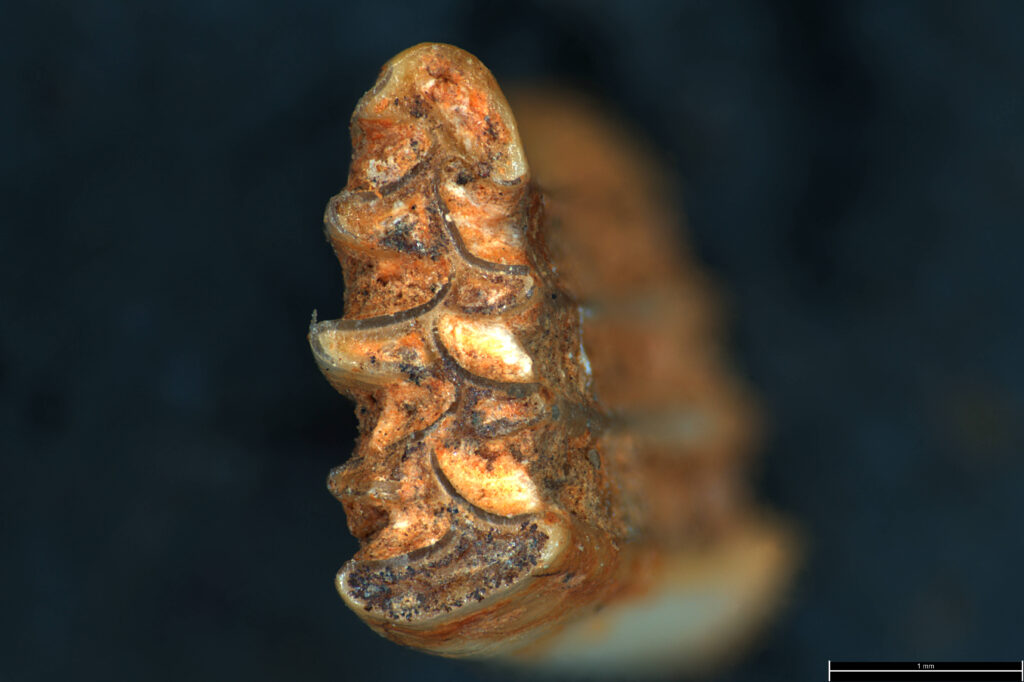
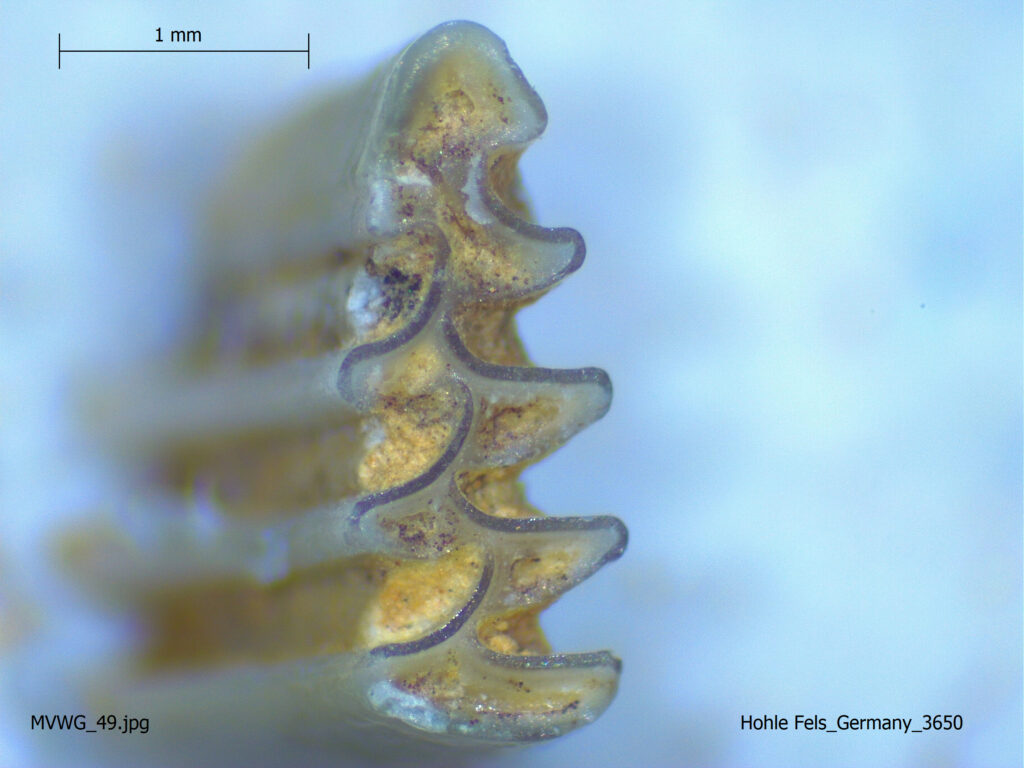
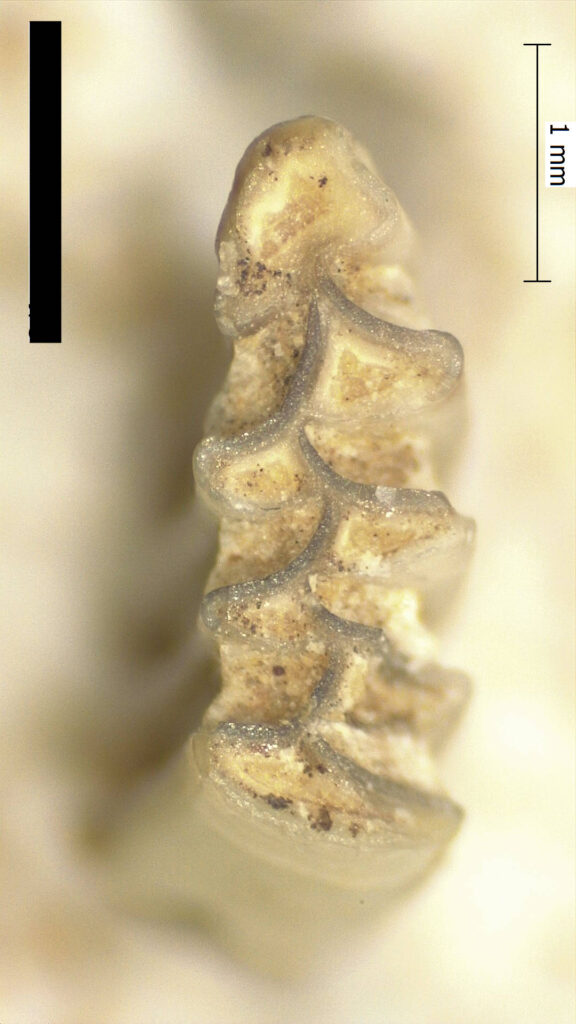
- m1 with:
- 5 separated triangles (T1 to T5)
- T6 and T7 visible but confluent with the anterior cap forming a unique complex of T6+T7+AC
- last two reentrant angles (BRA4 and LRA5) absent or very weak
- T5 usually separated with T6+T7+AC but sometimes confluent depending on the individuals
Essential references
Nadachowski, A., 1991. Systematics, geographic variation, and evolution of snow voles (Chionomys) based on dental characters. Acta Theriol. (Warsz). 36, 1–45.